
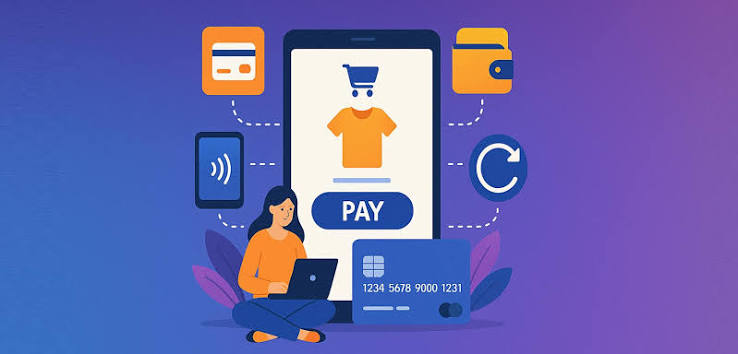
Digital payments have transformed the way consumers purchase products, manage money, and interact with financial institutions. stash patrick Credit cards, digital wallets, mobile banking applications, and online payment platforms have made transactions faster and more convenient than ever. Within this changing environment, online credit card marketplaces have emerged as useful platforms for consumers who want to compare financial products and understand their available options.
An online credit card marketplace can bring together information about different cards, allowing users to compare features such as annual fees, stashpatrick.cc interest rates, rewards, introductory offers, balance-transfer conditions, and other terms. Rather than visiting multiple financial institutions individually, consumers can research several products in one place.
The growth of these marketplaces is influencing digital payments in several important ways, from improving transparency to encouraging financial technology companies to develop more personalized services.
The Growth of Online Financial Comparison
Traditionally, consumers often depended on banks, printed materials, or financial advisers when researching credit cards. The internet has changed this process considerably.
Online marketplaces allow users to review multiple financial products from a single digital platform. Search and comparison tools can make it easier to identify cards that match different financial needs.
For example, one consumer may prioritize travel rewards, while another may be more interested in low fees or introductory interest-rate offers. Comparison platforms can help users organize these considerations before submitting an application.
This convenience has contributed to greater consumer awareness and has encouraged financial institutions to make product information easier to understand.
Greater Transparency for Consumers
One of the most significant benefits of online credit card marketplaces is increased access to information.
Consumers can often compare annual percentage rates, fees, rewards structures, eligibility requirements, and other conditions before making a decision.
Greater visibility can encourage consumers to evaluate the total cost of a financial product instead of focusing exclusively on promotional benefits.
However, users should still read official terms and conditions carefully. Comparison information can become outdated, and eligibility can vary depending on individual financial circumstances.
The best approach is to use marketplaces as a research tool and confirm important details directly with the financial institution.
Personalization Through Technology
Modern online marketplaces increasingly use technology to personalize financial information.
Digital platforms can organize products according to factors such as spending habits, rewards preferences, fees, and other consumer-selected criteria.
Artificial intelligence and data analytics may further improve how platforms present information. Instead of showing an overwhelming list of products, systems can potentially highlight options that appear more relevant to a user’s stated preferences.
Personalization can make financial research easier, but it also creates an important responsibility for platforms. Users should understand why particular products are being presented and whether commercial relationships influence rankings or recommendations.
Transparency remains essential as automated financial recommendations become more common.
Mobile Access to Financial Services
Smartphones have become an important part of digital payment infrastructure.
Consumers can now research financial products, submit applications, manage accounts, receive transaction notifications, and make payments through mobile devices.
Credit card marketplaces have benefited from this shift because users no longer need to conduct financial research from a desktop computer.
Mobile-first financial services can provide convenience, but they also increase the importance of device security. Users should protect smartphones with strong authentication, keep applications updated, and avoid accessing financial services through suspicious links or untrusted applications.
The Importance of Digital Security
The expansion of online financial services has also increased cybersecurity concerns.
Credit card information, personal identification details, and account credentials are valuable targets for cybercriminals. Phishing, malware, data breaches, and account takeover can create serious financial consequences.
Legitimate online marketplaces should use appropriate security measures to protect user information. Consumers should also verify that they are using an authentic website or application before entering sensitive information.
Strong passwords, multi-factor authentication, secure devices, and careful monitoring of financial accounts can provide additional protection.
Security is not simply a technical feature of digital payments. It is an essential part of maintaining consumer trust.
Tokenization and Safer Transactions
Tokenization has become an important development in digital payment security.
Instead of exposing an actual payment-card number during every transaction, a payment system can use a substitute token. Depending on the implementation, this token may have limited value outside its intended environment.
Tokenization can reduce the number of situations in which actual payment credentials need to be transmitted or stored.
Digital wallets and other modern payment systems frequently use tokenization as part of their security architecture.
When combined with encryption, authentication, fraud monitoring, and access controls, tokenization can help reduce the potential impact of payment-data exposure.
Faster Fraud Detection
Digital payment systems have also improved the ability of financial institutions to monitor transactions.
Modern fraud-detection systems can evaluate transaction amounts, locations, timing, merchant information, and historical account behavior.
If a transaction appears inconsistent with a customer’s normal activity, additional verification may be requested.
Machine-learning technologies can assist by identifying unusual patterns across large volumes of transactions.
These systems can help reduce fraudulent activity, although they cannot guarantee that every unauthorized transaction will be prevented.
Consumers remain an important part of the process by reviewing account activity and reporting suspicious transactions quickly.
Competition Among Financial Institutions
Online comparison platforms can increase competition between credit card providers.
When consumers can easily compare products, financial institutions have greater incentives to communicate their benefits clearly and offer competitive terms.
Banks may respond by developing better rewards programs, more flexible digital services, improved mobile applications, and enhanced customer-support options.
Competition can benefit consumers when it encourages institutions to improve both pricing and service quality.
At the same time, consumers should avoid choosing financial products based solely on promotional rewards. Interest rates, fees, repayment requirements, and long-term costs should also be considered.
The Role of Financial Technology Companies
Financial technology companies are helping reshape the traditional relationship between consumers and financial institutions.
Fintech platforms can provide digital applications, automated financial tools, payment services, budgeting features, and comparison systems.
These companies often emphasize convenience and user-friendly design.
As fintech continues to develop, partnerships between technology companies, banks, payment processors, and card networks are likely to become increasingly important.
This collaboration can create new payment experiences while also introducing additional responsibilities for data protection and regulatory compliance.
Responsible Use of Credit Cards
Greater access to credit card information does not automatically mean better financial decisions.
Consumers should evaluate their ability to repay balances and understand the costs associated with borrowing.
Interest rates, annual fees, late-payment charges, foreign transaction fees, and other conditions can significantly affect the long-term cost of a card.
Online marketplaces can make comparison easier, but users must still make informed decisions.
Financial education should therefore develop alongside digital payment technology.
The Future of Online Credit Card Marketplaces
The next generation of online credit card marketplaces will likely become more automated and personalized.
Artificial intelligence may help users organize financial information and compare products according to specific preferences. Improved identity verification could simplify applications while reducing fraud.
Digital wallets, tokenized payments, biometric authentication, and real-time transaction monitoring are also likely to become increasingly integrated with credit card services.
However, greater automation will require transparency. Consumers should understand how recommendations are generated and how their personal information is handled.
Privacy and security will remain central to the future of digital finance.
Challenges Facing Digital Marketplaces
Despite their advantages, online credit card marketplaces face several challenges.
Financial information must be presented accurately and updated regularly. Platforms must protect sensitive user data and comply with applicable financial and privacy requirements.
There is also a risk that consumers may become overwhelmed by excessive choices. A large number of products does not necessarily produce better decisions if important differences are difficult to understand.
Clear explanations, transparent comparisons, and responsible recommendations will therefore remain important.
Conclusion
Online credit card marketplaces are changing digital payments by making financial information more accessible, comparison more convenient, and payment services increasingly digital.
Consumers can research multiple products from a single platform, compare fees and rewards, and discover services that may match their financial needs. Meanwhile, financial institutions and fintech companies are responding with improved digital tools, stronger security systems, and more personalized experiences.
Technologies such as tokenization, multi-factor authentication, mobile banking, artificial intelligence, and real-time fraud detection are further transforming the payment ecosystem.
However, convenience must be balanced with responsibility. Consumers should verify financial information, understand product terms, protect their accounts, and use legitimate financial services.
Ultimately, online credit card marketplaces are becoming an important part of the broader digital-payment ecosystem. Their continued development will likely make financial comparison more accessible while encouraging financial institutions to compete through better products, stronger security, and improved digital experiences.